Ashok Bhan
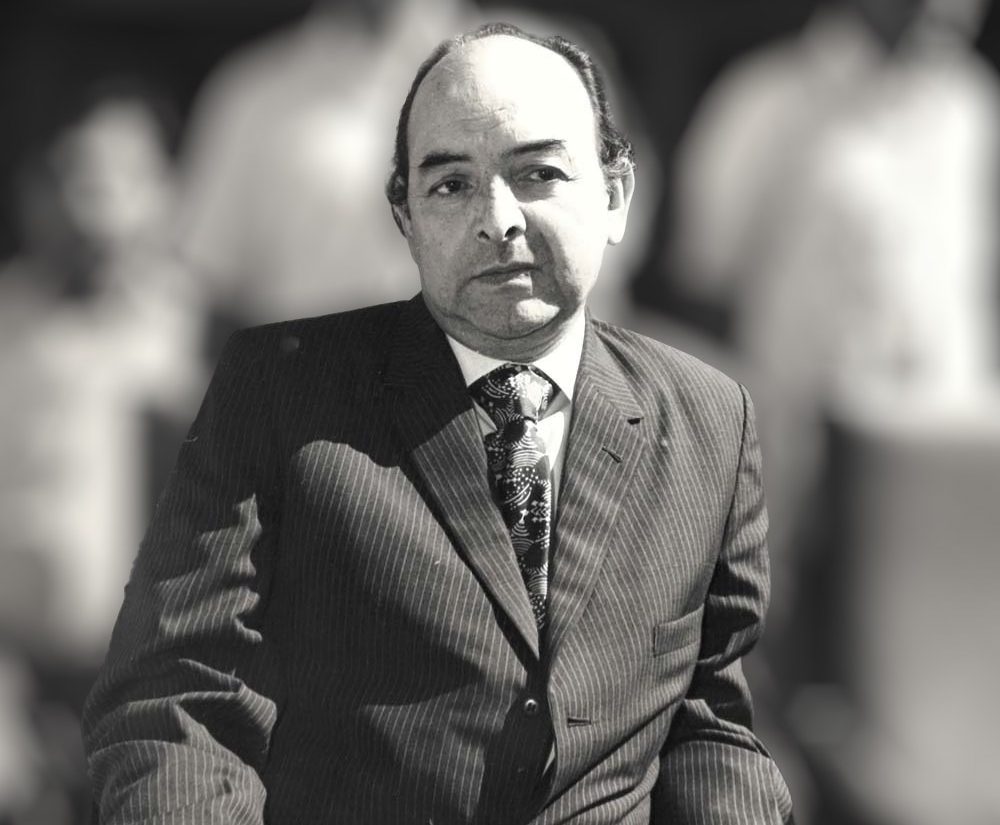
D. P. Dhar was the architect of India’s strategic policy
Among the towering personalities who shaped post-independence India’s strategic and political imagination, few possessed the intellectual depth, political sophistication and nationalist commitment as D. P. Dhar. Scholar, diplomat, parliamentarian, freedom fighter and master negotiator, Dhar belonged to that rare generation of leaders who combined ideological conviction with practical statecraft. His life was inseparably linked with the story of Kashmir, the consolidation of Indian democracy and the emergence of India as a confident regional power.
For Kashmiris, especially those who witnessed the turbulent decades following Partition, D. P. Dhar was not merely a politician. He represented a generation of Kashmiri intellectuals who believed deeply in secularism, democratic modernity and the plural civilisational idea of India. His contribution went far beyond electoral politics or governmental office; he became one of the principal architects of India’s Kashmir policy and an influential strategist during some of the most critical moments in the nation’s history.
Born in Srinagar in 1918 into a distinguished Kashmiri Pandit family, Dhar inherited a rich cultural and intellectual legacy. Kashmir, during his youth was passing through a period of political awakening against autocratic princely rule. Inspired by the growing democratic movement in the Valley, he joined the struggle led by Sheikh Abdullah and the Jammu & Kashmir National Conference. From an early age, he displayed remarkable political awareness and courage. His commitment to the anti-feudal and anti-colonial struggle transformed him into a dedicated freedom fighter.
The political movement in Kashmir was not merely a regional agitation; it was also a battle over the future identity of the State. Dhar firmly believed that Kashmir’s destiny lay with democratic and secular India rather than the communal politics that accompanied Partition. During the most uncertain years surrounding 1947, he emerged as one of the articulate defenders of Kashmir’s accession to India. His intellectual clarity and persuasive political reasoning helped shape the arguments that strengthened the constitutional relationship between Jammu and Kashmir and the Union of India.
Dhar’s rise in public life was marked by extraordinary administrative capability. He became one of the closest political associates of Sheikh Abdullah and later held important positions in the Jammu and Kashmir government. Yet, unlike many politicians of his time, he was not driven by personal ambition alone. He possessed the temperament of a thinker and a strategist. He understood that Kashmir’s complexities required both emotional sensitivity and geopolitical realism.
His role during the events leading to the creation of Bangladesh remains one of the finest examples of Indian diplomatic statecraft.
One of his greatest strengths was his ability to engage with difficult political questions through dialogue and negotiation. Calm, articulate and intellectually rigorous, D. P. Dhar earned a reputation as one of India’s finest negotiators. Whether dealing with internal political crises or sensitive international matters, he combined firmness with sophistication. His political style reflected both Kashmiri refinement and strategic patience.
As India’s diplomatic profile expanded during the Cold War era, Dhar emerged as one of the most trusted advisers of Indira Gandhi. He played a decisive role in shaping India’s foreign policy orientation during one of the most consequential periods in South Asian history. His appointment as India’s Ambassador to the Soviet Union demonstrated the immense confidence the Indian leadership placed in his diplomatic skills.
Dhar’s tenure in Moscow proved historically significant. He was instrumental in strengthening Indo-Soviet relations at a time when global alignments were rapidly changing. His strategic understanding and persuasive diplomacy contributed greatly to the signing of the historic Indo-Soviet Treaty of Peace, Friendship and Cooperation in 1971. That treaty gave India crucial geopolitical confidence during the Bangladesh crisis and fundamentally altered the strategic balance in South Asia.
His role during the events leading to the creation of Bangladesh remains one of the finest examples of Indian diplomatic statecraft. Dhar was among the principal architects behind India’s political and diplomatic preparations during the 1971 war. While military leadership won the battlefield victory, the diplomatic framework that prevented international isolation was carefully crafted by strategists like D. P. Dhar. His ability to anticipate global reactions and build international support proved invaluable.
Despite his national and international responsibilities, Kashmir always remained close to his heart. He viewed Kashmir not merely as a territorial issue but as a civilisational bridge embodying India’s plural ethos. He understood the psychological dimensions of alienation and the importance of democratic legitimacy. His approach toward Kashmir combined national security concerns with political outreach and institutional engagement.
Dhar also believed strongly in economic development and modernisation. He recognised that political stability in Kashmir required social justice, educational advancement and economic opportunity. His developmental vision reflected a broader understanding of nation-building in which democratic inclusion and regional aspirations had to coexist.
As Union Minister and policy planner, Dhar brought intellectual seriousness into governance. He was among the rare political figures capable of integrating diplomacy, economics, security and constitutional policy into a coherent national vision. His speeches and policy interventions reflected depth, clarity and strategic foresight. Even political opponents acknowledged his brilliance as a thinker and negotiator.
One of the remarkable aspects of D. P. Dhar’s personality was his quiet patriotism. He was never theatrical or populist. He preferred serious policy work over political spectacle. Yet behind his composed demeanour lay immense determination and national commitment. He belonged to a generation that viewed public life as an instrument of service rather than personal glorification.
His contribution to India’s strategic establishment also deserves greater recognition. Many of the institutional approaches that later shaped India’s regional diplomacy carried his intellectual imprint. He understood early that India’s security could not be separated from regional stability and diplomatic preparedness. His thinking displayed a rare blend of realism and idealism.
For Kashmiri Pandits, D. P. Dhar symbolised intellectual excellence and patriotic commitment rooted in Kashmir’s syncretic heritage. He represented the rich tradition of Kashmiri scholarship that valued dialogue, learning and public duty. At a time when Kashmir increasingly became a theatre of conflict and competing narratives, Dhar’s life reminds us of an era when political engagement was guided by ideas, principles and constitutional vision.
His untimely death in 1975 deprived India of one of its most sophisticated strategic minds. Yet his legacy continues to resonate in Indian diplomacy, federal politics and the continuing discourse on Kashmir. In many ways, D. P. Dhar belonged to a generation of nation-builders whose contributions are deeply embedded in the foundations of modern India, even if they are not always adequately remembered in public memory.
Today, as India confronts complex geopolitical challenges and Kashmir continues to occupy a central place in national discourse, the memory of D. P. Dhar acquires renewed relevance. His life teaches the importance of political wisdom over rhetoric, negotiation over confrontation and strategic clarity over emotional impulsiveness. He demonstrated that nationalism need not be loud to be profound.
Above all, D. P. Dhar’s journey was the story of a Kashmiri patriot who rose from the political struggles of the Valley to become one of the principal architects of India’s diplomatic and strategic vision. Freedom fighter, statesman, diplomat and policy planner, he served India with intellect, dignity and unwavering commitment.
History will remember D. P. Dhar as one of the finest minds produced by Kashmir — a statesman whose ideas and efforts helped shape both the destiny of Kashmir and the trajectory of modern India.
Author is a noted Senior Advocate and an accomplished geo political analyst
This article was originally published on 12 June 2026 in Greater Kashmir. Read here.